The response was a perfect synthesis: pioneers like Geoffrey Bawa in Sri Lanka and Charles Correa in India began to ask how sun, wind, and rain could become design elements rather than obstacles. The result? An architecture that is light, open, and generous, capable of cooling itself without the massive use of air conditioning.
Design Principles: Sensory, Sustainable, Rooted
At the heart of Tropical Modernism is "intelligent adaptation." Key defining elements include. Spatial Porosity: the boundaries between interior and exterior dissolve. Walls become gardens, while terraces and shaded pavilions allow nature to be an integral part of the home.
Rather than sealing people in climate-controlled boxes, the design harnesses natural air currents through open floor plans, internal courtyards, and ventilated corridors.
Large roof overhangs, brise-soleil (sun breakers), and wide verandas protect interiors from direct sunlight, creating cool and livable shaded zones.
Local stone, brick, timber, and exposed concrete are chosen for their thermal performance and to celebrate the natural texture of the land.
Reflection pools and water features are not merely aesthetic; they serve to cool the surrounding air through evaporation.
Tropical Modernism is experiencing a powerful resurgence because its philosophy aligns perfectly with 21st-century challenges:
Energy Efficiency: As global temperatures rise, passive design strategies offer practical solutions to reduce energy consumption.
Biophilic Design: There is a growing desire for spaces that foster a connection with nature, a need this style meets instinctively.
Local Identity: In the metropolises of Asia and Latin America, this style represents a reclamation of cultural identity against the anonymity of standardized glass towers.
5 Iconic Masterpieces and Their Architects
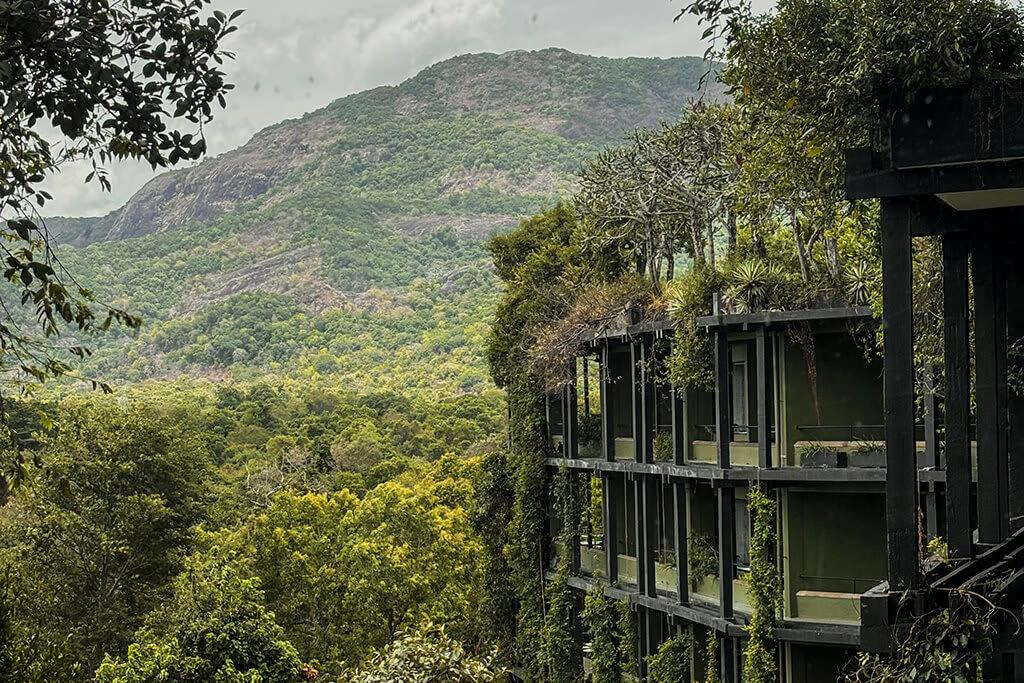
Kandalama Hotel (Sri Lanka) – Geoffrey Bawa Nestled into the cliffs near Dambulla, this hotel erases the line between the built environment and the jungle. Bawa succeeded in embedding the structure into the landscape, letting the rainforest and wildlife animate every space.
Jawahar Kala Kendra (India) – Charles Correa A cultural center in Jaipur based on traditional Indian spatial planning. Correa uses shaded courtyards and porticos to mitigate the scorching Rajasthan sun, creating a hub for social interaction.
National Parliament House (Bangladesh) – Louis Kahn While not strictly regional, Kahn’s building responds forcefully to the Bangladeshi climate through massive geometric forms and apertures that filter heat, creating monumental yet cool spaces.
Parliament of Sri Lanka – Geoffrey Bawa A masterpiece that appears to float on an artificial lake. The use of shaded walkways and cross-ventilation creates an atmosphere of serenity and unparalleled climatic comfort.
SESC Pompéia (Brazil) – Lina Bo Bardi In São Paulo, Lina Bo Bardi transformed an old factory into a vibrant cultural center. With concrete towers connected by aerial walkways and vast open common spaces, the building embodies the idea that architecture must serve both the environment and society.
Tropical Modernism is not a simple aesthetic trend, but a necessity. It teaches us that buildings should not dominate the land, but belong to it. It is an architecture that does not merely occupy a space, but lives and breathes alongside those who inhabit it.