
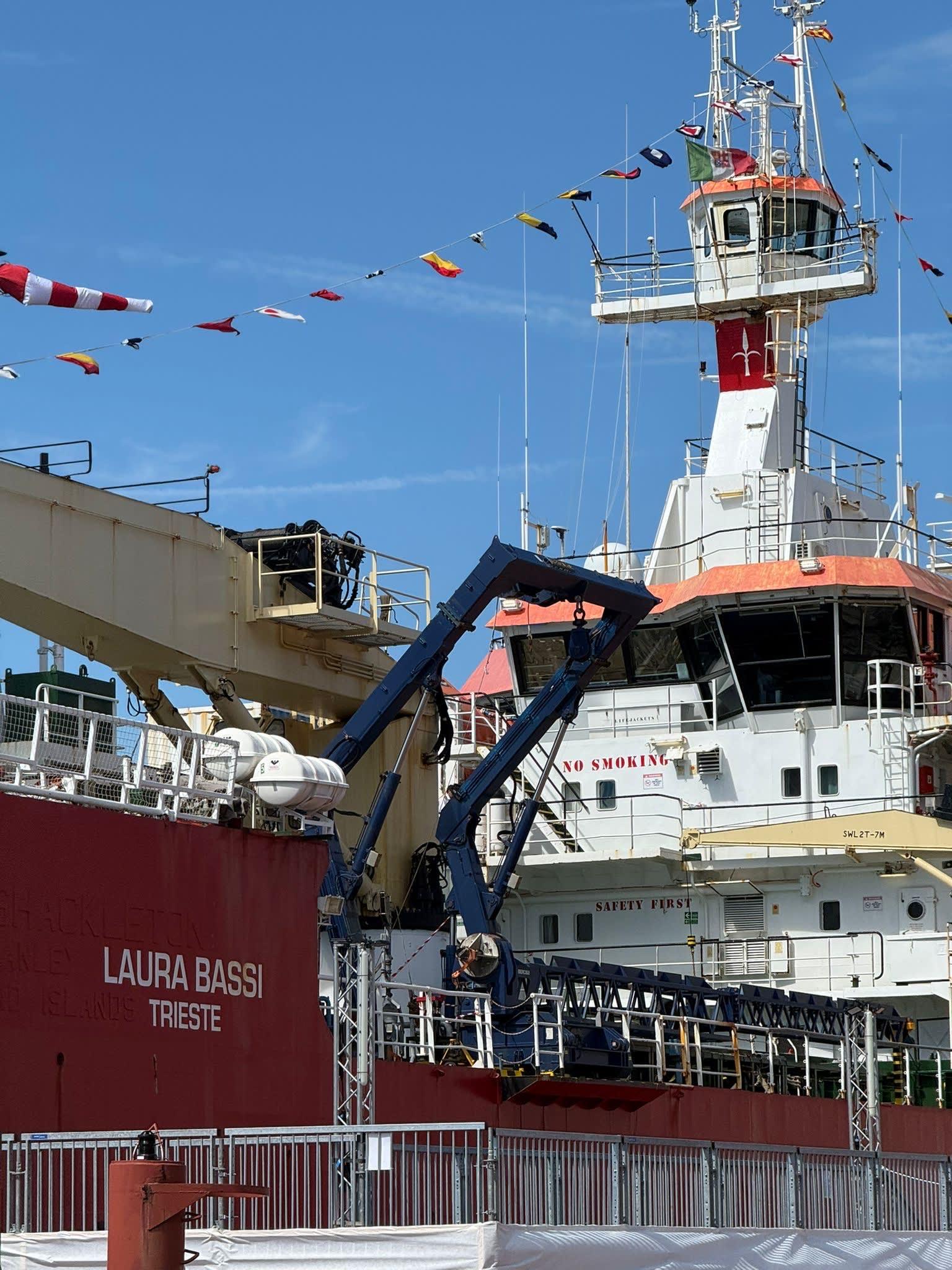
The vessel, which set sail from the port of Trieste, serves as the operational heart of the National Antarctic Research Program (PNRA), funded by the Italian Ministry of University and Research (MUR). This year’s ambitious mission involves an impressive deployment of approximately 200 Italian researchers, scientists, and specialized technicians.
Crucial Frontiers of Scientific Research
The Italian expedition will focus on a wide spectrum of scientific disciplines crucial for deepening the global understanding of planetary mechanisms. Key areas of investigation include:
Climate Change Impacts: Studying the direct effects of global warming on ice sheets and its subsequent influence on global meteorological phenomena.
Marine Geology & Oceanography: Conducting extensive mapping of the seabed and investigating deep-sea current circulation, both of which are critical parameters for refining global climate models.
Polar Ecosystems: Exploring and monitoring the unique, highly adapted biodiversity of the Antarctic continent to assess environmental vulnerability.
The 200-strong team will distribute operations across three critical platforms: the Italian "Mario Zucchelli" Station (MZS) located along the coast of the Ross Sea, the joint Italian-French international base "Concordia" on the high Antarctic plateau, and onboard the "Laura Bassi" itself during dedicated oceanographic research campaigns.
A Fundamental Pillar for Logistics and Science
Managed directly by OGS, the icebreaker "Laura Bassi" performs a dual-purpose role essential to national polar operations. In addition to serving as a state-of-the-art scientific laboratory capable of operating in ice-frequented waters, it provides indispensable logistical support. The ship is responsible for transporting critical heavy materials, laboratory equipment, and fuel required to keep the Mario Zucchelli Station fully functional and safe throughout the intense Antarctic summer season.
Institutional Governance
The strategic oversight and operational execution of the National Antarctic Research Program (PNRA) are coordinated by a synergy of three leading public scientific entities:
CNR (National Research Council): Responsible for overall scientific coordination and research program evaluation.
ENEA (Italian National Agency for New Technologies, Energy and Sustainable Economic Development): Tasked with logistical planning, infrastructure management, and base operations.
OGS (National Institute of Oceanography and Applied Geophysics): Responsible for the technical and operational management of the oceanographic vessel "Laura Bassi".
With the arrival of the initial contingent and the docking of the "Laura Bassi", Italy's polar research season officially enters its peak phase, continuing a long-standing national tradition of scientific excellence in one of the world's most vital, yet vulnerable, environments.
About the National Antarctic Research Program (PNRA)
Funded by the Italian Ministry of University and Research (MUR), the PNRA drives Italy’s scientific endeavors in the polar regions. Scientific coordination is spearheaded by the National Research Council (CNR), logistics management is directed by ENEA, and marine exploration assets are managed by the OGS.
About OGS
The National Institute of Oceanography and Applied Geophysics (OGS) is an Italian public research institution under the supervision of the MUR. It operates internationally in the fields of earth, marine, and polar sciences, managing strategic national research infrastructures including the icebreaker "Laura Bassi".