FOR IMMEDIATE RELEASE
Italy’s Industrial Heartland Demands State Action on Former ILVA Steel Plant as Public Backs National Relaunch
TARANTO, Italy – May 28, 2026 — In a major push to safeguard Italy's automotive and manufacturing supply chains, top industrial leaders gathered inside the Acciaierie d’Italia (formerly ILVA) steel plant in Taranto yesterday to signal that the future of Europe's largest steelworks is a matter of critical national and continental sovereignty.
Flanked by the leadership of Federmeccanica (the Italian Federation of Metalworking Industries) and Confindustria Taranto, executives unveiled a landmark study by Community Research & Analysis showing overwhelming public resistance to closing the site. According to the data, 85.7% of Italians and 86.1% of local Apulian residents oppose a permanent shutdown, demanding instead a strategic relaunch under strong domestic or state-backed ownership.
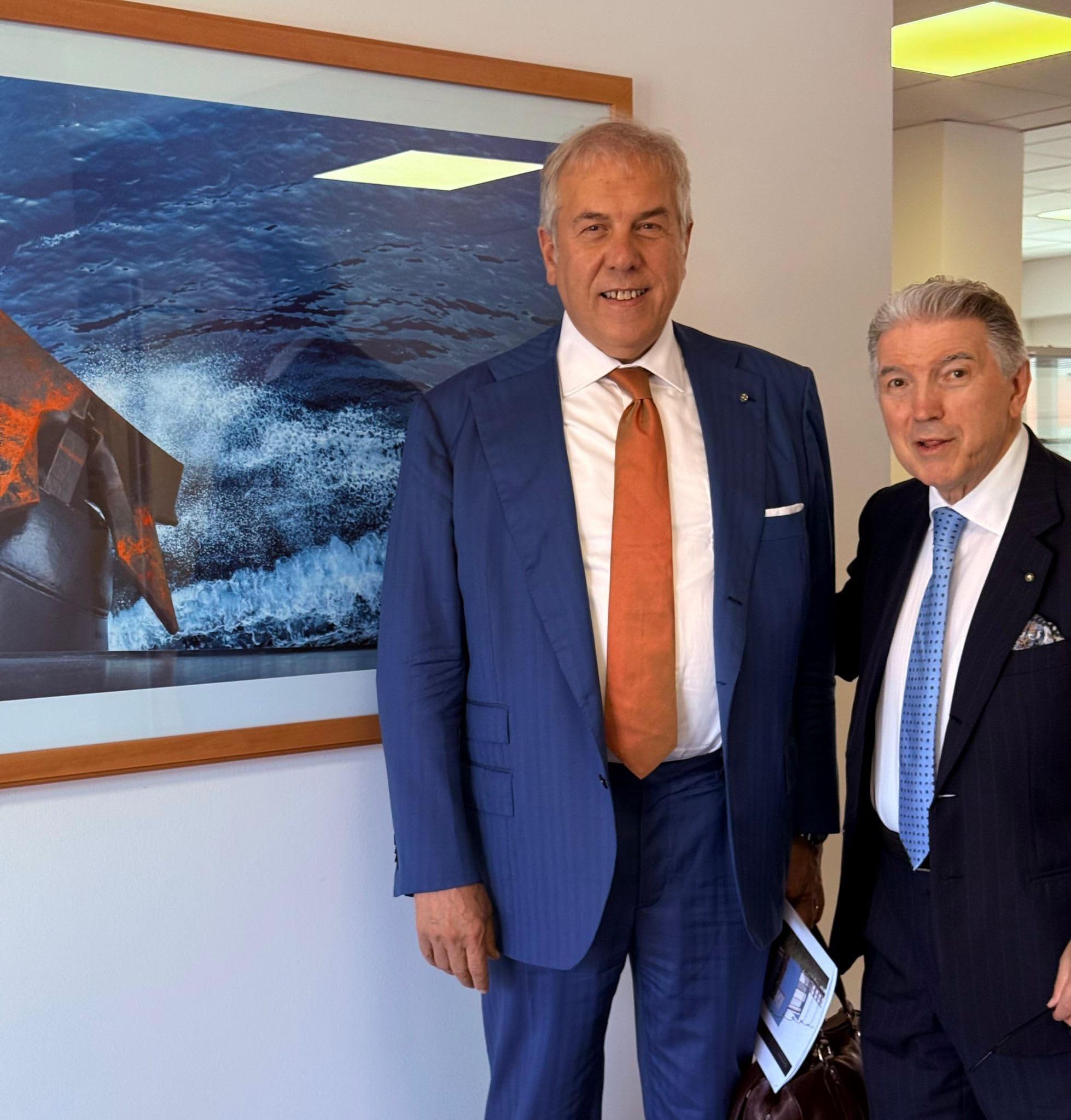
The high-level summit, which included former Federmeccanica presidents Alberto Dal Poz, Federico Visentin, and Fabio Storchi, comes at a critical geopolitical juncture as European manufacturers face tightening climate regulations and supply chain fragmentation.
A Strategic Backstop Against Import Dependency
For Italy—Europe’s second-largest manufacturing economy—the Taranto plant is not a localized crisis, but a vital macroeconomic asset. Industry leaders warned that losing domestic steel capacity would severely expose Italian manufacturing to volatile foreign markets and the financial penalties of the EU's Carbon Border Adjustment Mechanism (CBAM).
"The data confirms that this is not just a major factory; it is a fundamental cornerstone of Italy," said Simone Bettini, President of Federmeccanica. "Defending this asset is about protecting our supply chains. Giving up on it would condemn Italy to foreign dependency and heavy CBAM costs, risking a break in the supply chains of Italian manufacturing. The time for delays is over."
The Case for Nationalization and Ethical Transition
A central theme of the summit was the necessity of robust state intervention to bridge the gap between heavy industry and ecological compliance. Fabio Storchi, speaking both as a past president and as head of the Scientific Technical Committee of UCID (Christian Union of Business Executives), made an explicit call for state ownership to ensure social stability.
"We believe that nationalization and a decisive intervention by the State are indispensable to assume an ethical as well as economic responsibility," Storchi stated, emphasizing the need to protect thousands of industrial families while pioneering a sustainable, eco-friendly path for European steelmaking.
Navigating the "Information Paradox"
The study, led by Professor Daniele Marini, revealed that while roughly 80% of the Italian public closely follows the ILVA dossier, a distinct "information paradox" remains. Despite high public awareness of ecological issues, there is still very low technical understanding among citizens regarding how green steel production actually operates.
Industrial leaders argue this underscores the need for clear governance and an immediate, transparent operational roadmap. Salvatore Toma, President of Confindustria Taranto, stressed that urgent measures are required as the plant navigates asset sales and the transition to its next corporate governance structure.
"It is critical to build a comprehensive short-term vision that integrates economy, culture, environment, and territory," Toma said. "The research proves it is imperative to guarantee both the plant's permanent presence in the region and its relaunch in an eco-sustainable key, drawing a clear line between what was and what will be."