OPINION from TiLancio and Tilanciointernational HQ in Trieste Italy April 13 2026 – There is a chilling irony in the current global climate. As the drums of war beat louder across various continents, the hands holding the drumsticks often belong to leaders in their seventies and eighties. These are men and women born in the shadow of the Great Wars, yet far enough removed from their visceral horrors to have forgotten—as humans naturally do—the true cost of the "glory" they now propose.
We must reflect on a phenomenon known to almost every family that lived through the first half of the 20th century: the silence of the veterans. Our grandfathers and great-grandfathers, those who crawled through the mud of the trenches or survived the collapse of scorched cities, rarely spoke of what they saw.
Their silence was not a lack of memory, but a burden of pain. The facts were too agonizing to translate into bedtime stories. They carried the weight of that trauma so that their children wouldn't have to. Today, that silence is being misinterpreted as an absence of danger. Because the screams of the past have faded into the quiet of cemeteries, a new generation of aging leaders feels emboldened to treat the world like a chessboard.
It is a tragic trait of the human condition that we forget the sting of the fire once the scar heals. Leaders who did not experience the hunger, the displacement, and the absolute nihilism of total war are now gambling with a peace they inherited but did not have to build from the rubble.
When war is discussed today, it is often sanitized through the language of "strategy," "defense budgets," and "geopolitical interests." We have lost the vocabulary of the human soul—the understanding that every "surgical strike" or "escalation" represents the end of a world for a mother, a child, or a family.
Anchoring to Sanity: Honoring the Work of Our Forebears
To prevent the total collapse of the civilization our ancestors bled to construct, we must anchor ourselves to "healthy values" and "sacred memories," even those we did not experience firsthand. We do not need to have stood in a bread line in 1944 to respect the stability we enjoy in 2026.
We must honor the labor of our ancestors by refusing to let their sacrifices be undone by the vanity of the elderly powerful. Their "work" was not just building roads and institutions; it was the creation of a peace meant to last longer than their own lifetimes.
We must listen to the echoes of that old, painful silence. We must remember that war is not a solution; it is the ultimate failure of the human imagination. If we allow those who have forgotten the past to dictate the future, we risk losing everything our forefathers worked for.
It is time to choose the values of life, culture, and preservation over the hollow rhetoric of conflict. Let us be the generation that remembers, so that the next generation never has to learn the hard way.
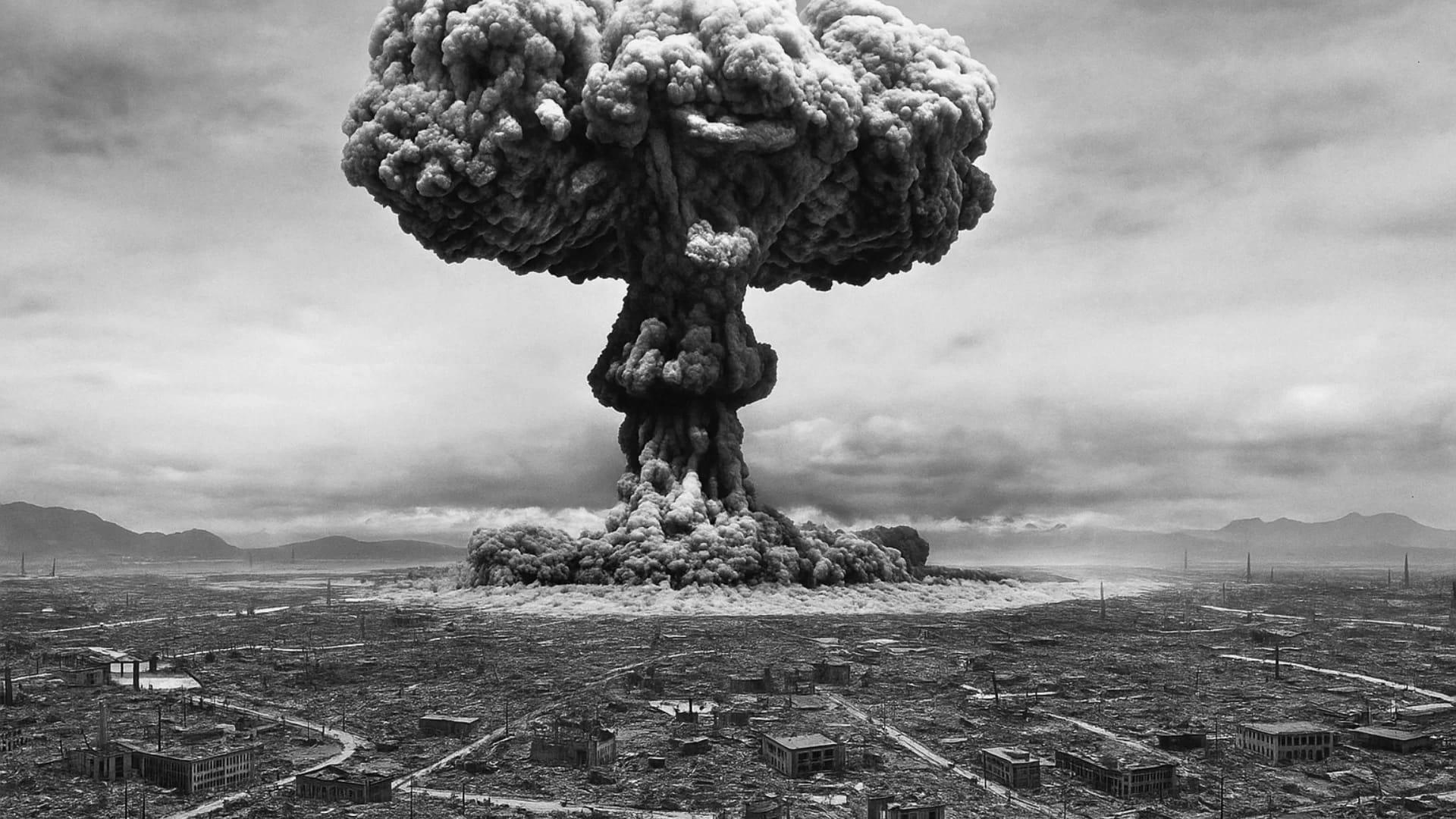
"On August 6, 1945, at 8:15 AM, the United States dropped the first atomic bomb, codenamed 'Little Boy,' on the Japanese city of Hiroshima. The device, which exploded at an altitude of approximately 580 meters, caused roughly 80,000 immediate deaths and almost total destruction of the city. The final death toll, including victims of radiation exposure, exceeded 150,000 to 200,000 lives."