
News|International
Ti Lancio
Reportage

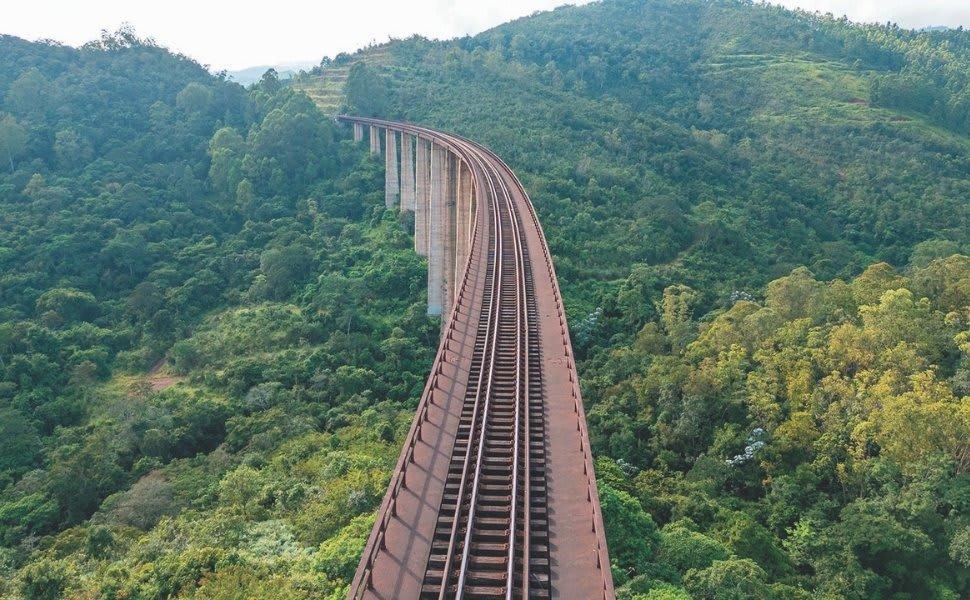
Brazil’s Rail Revolution: A R$ 530 Billion Leap Toward Logistical Efficiency

The Brazilian government has unveiled a massive National Railway Plan involving R$ 530 billion (approx. $95–100 billion USD) directed at 15 strategic rail projects.

Di Admin Ti Lanciomartedì 28 aprile 20262 min di lettura
Brazil’s Rail Revolution: A R$ 530 Billion Leap Toward Logistical Efficiency
Brazil is at a turning point in its infrastructure history. The federal government has recently unveiled an ambitious National Railway Plan, projecting an unprecedented R$ 530 billion in investments across 15 strategic railway projects. This move aims to reshape the country's transport matrix, reducing its historical over-reliance on road transport and slashing logistical costs for global exports.


The plan, spearheaded by the Ministry of Transport, focuses on unlocking over 9,000 kilometers of new and existing tracks. By 2026, the government aims to hold eight major auctions, introducing a hybrid model of Public-Private Partnerships (PPPs). 


What makes this plan different from previous attempts is the "gap de viabilidade" (viability gap) approach. The government plans to provide public subsidies and use infrastructure debentures to attract private capital, ensuring that projects which are socially necessary but financially challenging become attractive to international investors. This new regulatory framework offers greater legal certainty and a clear roadmap for the coming decade.

Beyond economics, the "Railways Roadshow" highlights a commitment to the green transition. Shifting cargo from trucks to trains significantly lowers carbon emissions and improves road safety. For a country that is a global powerhouse in commodities like soy, corn, and iron ore, this modernization is not just an internal upgrade—it is a strategy to remain competitive in a world demanding sustainable supply chains.


The road ahead is not without challenges, including environmental licensing and the tight schedule of an election year. However, the scale of this R$ 530 billion commitment signals that Brazil is finally ready to put its "logistical bottleneck" in the past. For investors and infrastructure players, the message is clear: Brazil is back on track.

News Recenti

The Modena Tragedy and the Integration Dilemma: A Challenge Confronting All of Italy
Reportage

The Modena Tragedy and the Integration Dilemma: A Challenge Confronting All of Italy

A horrific car attack in Modena has thrust Italy’s integration policies back into the spotlight. Beyond the specific case of the driver—a 31-year-old Italian-Moroccan with a history of mental illness—the tragedy exposes deep-seated national issues: the strain of unregulated migration on local services, the identity crisis facing second-generation youths, and an urgent demand from local communities for a policy shift toward strict legality and urban safety.