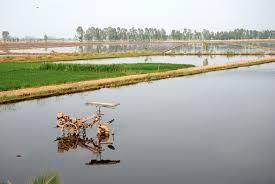
Saline intrusion is no longer a seasonal nuisance; it has become a permanent siege. Several factors are converging to "poison" the fresh water that the region depends on different reasons. As the South China Sea rises, it pushes salt water further inland. This is exacerbated by El Niño cycles, which bring prolonged droughts and reduce the river’s natural ability to push back the sea. The flow of the Mekong is heavily regulated by a chain of mega-dams, particularly in China. When these dams hold back water, the downstream flow in Vietnam drops, allowing sea water to rush into the river channels. Excessive groundwater extraction and industrial sand mining are causing the land itself to sink (subsidence).
The impact on agriculture is catastrophic. Rice, a crop that is notoriously sensitive to salt, is dying in the fields. According to reports from AsiaNews and Corriere del Ticino, the salinity levels in many provinces have reached points where neither irrigation nor drinking water is safe. "We are witnessing the slow drowning of a civilization," warns an environmental scientist. "If current trends continue, experts suggest that significant portions of the Mekong Delta could be underwater or rendered completely infertile by 2100."
Beyond the economy, there is a mounting humanitarian crisis. Thousands of households are currently facing severe shortages of fresh water. In some areas, water must be transported by truck or boat, as local wells have turned brackish. This scarcity is driving a new wave of internal migration, as farmers abandon ancestral lands that can no longer sustain life.
As discussed in recent analyses by Il Bo Live, saving the delta requires a multi-pronged international strategy: improved cooperation between the Mekong River Commission countries to ensure fair water release from upstream dams. Developing salt-tolerant rice varieties and shifting toward shrimp farming or other salt-resilient livelihoods. Building sluice gates and dikes, though these are often criticized as "band-aid" solutions that don't address the root causes of land subsidence.
The crisis in the Mekong is a preview of what other major deltas—from the Po in Italy to the Mississippi in the U.S.—may face in the coming decades. It is a stark reminder that ecological boundaries are fragile, and once the salt takes hold, the path back to fertility is long and uncertain.