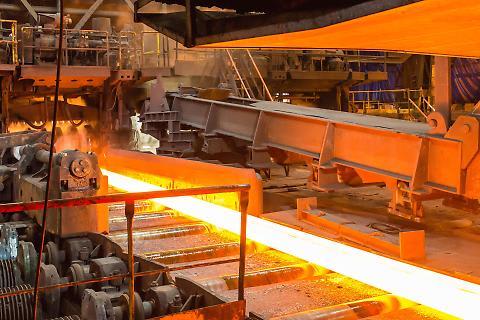
Federmeccanica (the Italian Federation of Metalworking Industries) and Confindustria Taranto are convening an emergency joint session of their Executive and General Councils directly inside the Research and Development Center of Acciaierie d’Italia (formerly known globally as ILVA), which is currently operating under state-appointed extraordinary administration.
The Italian metalworking sector is closing ranks around this strategic asset at a time of unprecedented crisis. International press agency "Ti Lancio" will be reporting live from inside the steelworks, providing real-time updates, interviews, and deep-dive analysis on a dilemma that resonates across heavy industries worldwide.
The August 24 Ultimatum: A Multi-Billion Dollar "Spada di Damocle"
Tomorrow’s high-stakes industrial summit takes place under the shadow of a ticking legal time bomb. The Business Section of the Court of Milan—incorporating a landmark ruling by the European Court of Justice (ECJ)—issued a peremptory decree: the steel plant must halt production at its entire blast-furnace area ("area a caldo") by August 24, 2026, unless extraordinary commissioners implement strict, legally binding environmental guarantees to mitigate severe health risks for the local population.
With less than three months left on the clock, Italian state-appointed commissioners and the national government are racing against time to integrate a new, hyper-stringent environmental plan. The court orders mandate:
PM10 & PM2.5 Continuous Monitoring: Real-time, legally binding caps on fine particulate matter.
Wind-Day Protocols: Immediate production slowdowns during high-wind days to prevent iron ore dust from blanketing nearby residential districts.
Coke Oven Emissions: Complete containment of fugitive toxic gasses during coke pushing and handling.
If these criteria are not met, the technical procedures to safely extinguish the massive blast furnaces will begin, bringing a definitive end to Europe's largest integrated steel manufacturing engine.
Sixty Years on the Edge: The History of a Global Industrial Titan
To understand the international weight of tomorrow's meeting, one must look at the half-century timeline of a site that has long epitomized the tragic, binary trade-off between the economic right to work and the fundamental right to health.
The State-Owned Golden Era
1960 - 1965
Inaugurated by state-owned Italsider, the Taranto plant was built as a titanic industrial hub to drive Italy's post-war economic miracle and boost employment in the underdeveloped South. However, heavy industrial output expanded directly adjacent to the urban fabric, heavily impacting the Tamburi residential district.
Privatization and Global Records
1995
The Italian state privatized its steel sector. The site was acquired by the Riva family and renamed ILVA. Under private management, it became Europe's largest steel mill, peaking at an output of over 10 million metric tons per year, supplying automotive and engineering sectors worldwide while accumulating a staggering environmental and epidemiological deficit.
Judicial Seizure & State Intervention
July 2012
Italian magistrates ordered the preventive seizure of the blast furnaces during the explosive "Ambiente Svenduto" (Environment Sold Out) criminal investigation, citing unacceptable cancer clusters. To prevent a catastrophic chain reaction across the European manufacturing supply chain, Rome stepped in with emergency decrees, eventually placing the company under Extraordinary Administration in 2015.
The Failed ArcelorMittal Partnership
2018 - 2024
Global steel giant ArcelorMittal took over management via a public-private joint venture called Acciaierie d'Italia (AdI). The partnership eroded due to endless legal battles over environmental immunity ("lo scudo penale") and plunging production rates. By early 2024, the joint venture collapsed into insolvency, forcing Rome to evict ArcelorMittal and place the asset back under emergency state control to look for new international buyers.
Tomorrow’s Agenda: Guarding Italy’s Industrial Sovereignty
The press conference tomorrow, starting at 11:00 AM CET following a media briefing at the corporate headquarters, will be led by Simone Bettini, President of Federmeccanica, and Salvatore Toma, President of Confindustria Taranto.
A key highlight of the event will be the presentation of a nationwide socio-economic study titled “The Ex-Ilva of Taranto and the Orientations of Italians,” conducted by Daniele Marini, Scientific Director of Community Research & Analysis. The data will reveal exactly how Italian public opinion balances the strategic necessity of domestic steel production against the non-negotiable imperative of ecological transformation.
"Ti Lancio" Live From the Ground
The ex-Ilva dilemma is not just an Italian story—it is a case study for heavy industry worldwide as old industrial models face the hard realities of modern environmental law and decarbonization deadlines. As the countdown to August 24 accelerates, "Ti Lancio" will be inside the Taranto facility tomorrow, delivering live reporting, verifying raw data, and bringing the voices of industrial leaders and stakeholders to the global stage.