
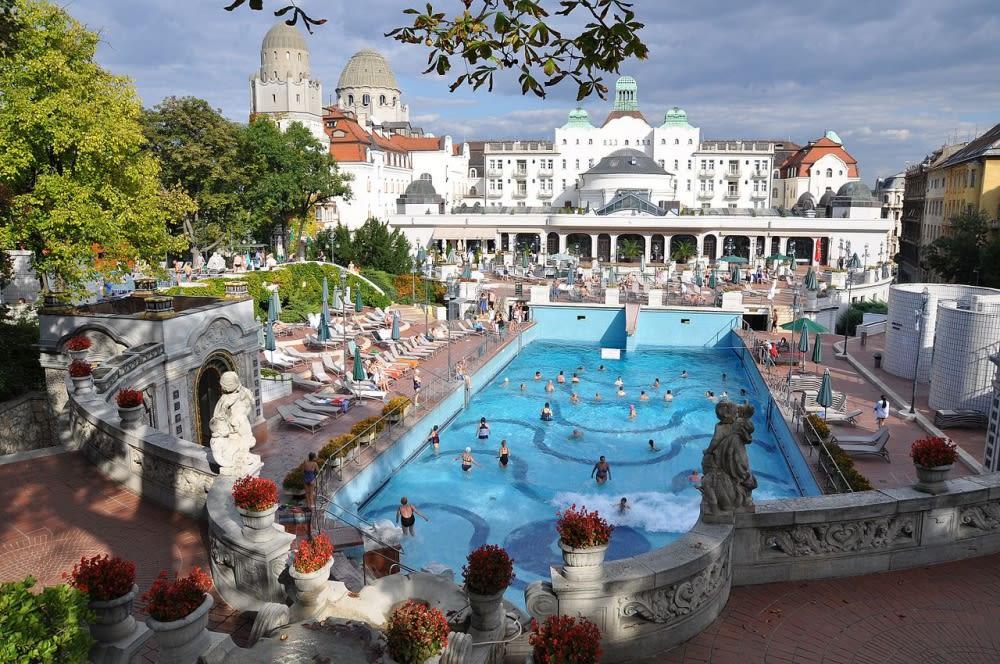
Since its opening in 1918, the Gellért has been more than just a spa; it is a living museum. Known for its turquoise Zsolnay ceramics, intricate stained-glass windows by Miksa Róth, and imposing marble columns, the complex has hosted royalty, Hollywood stars, and millions of travelers. However, decades of use and the passage of time have made a deep structural and aesthetic restoration necessary to preserve its integrity.
The restoration plan, led by the BDPST Group in collaboration with the Budapest Spas and Thermal Baths (BGYH), is not merely a repair job. It is a transformation. Key highlights of the project include:
Every mosaic tile and sculpture will be meticulously restored by specialists to ensure the "Gellért feeling" remains untouched.
The project is closely linked to the renovation of the adjacent Gellért Hotel, which will be operated by the luxury brand Mandarin Oriental. This partnership promises to elevate the complex to a world-class destination.
Modernizing the Wellness Experience: While the historic aesthetics remain, the technical infrastructure—from water filtration to heating systems—will be completely overhauled to meet modern sustainability standards.
The "Awakening of the Icon" is seen as a pivotal moment for Budapest’s tourism strategy. By focusing on high-end heritage tourism, the city aims to position itself alongside Vienna and Paris as a premier cultural hub. The Gellért renovation serves as a flagship project in this transition, proving that historic preservation can go hand-in-hand with economic development.
For those who have walked through its majestic halls, the Gellért Baths represent the soul of Budapest. As the restoration moves forward, the world watches with anticipation. The goal is clear: to ensure that when the doors swing open once again, the "Palace of Bathing" will continue to enchant generations to come, standing as a testament to Hungary’s rich history and its bright, renewed future.