
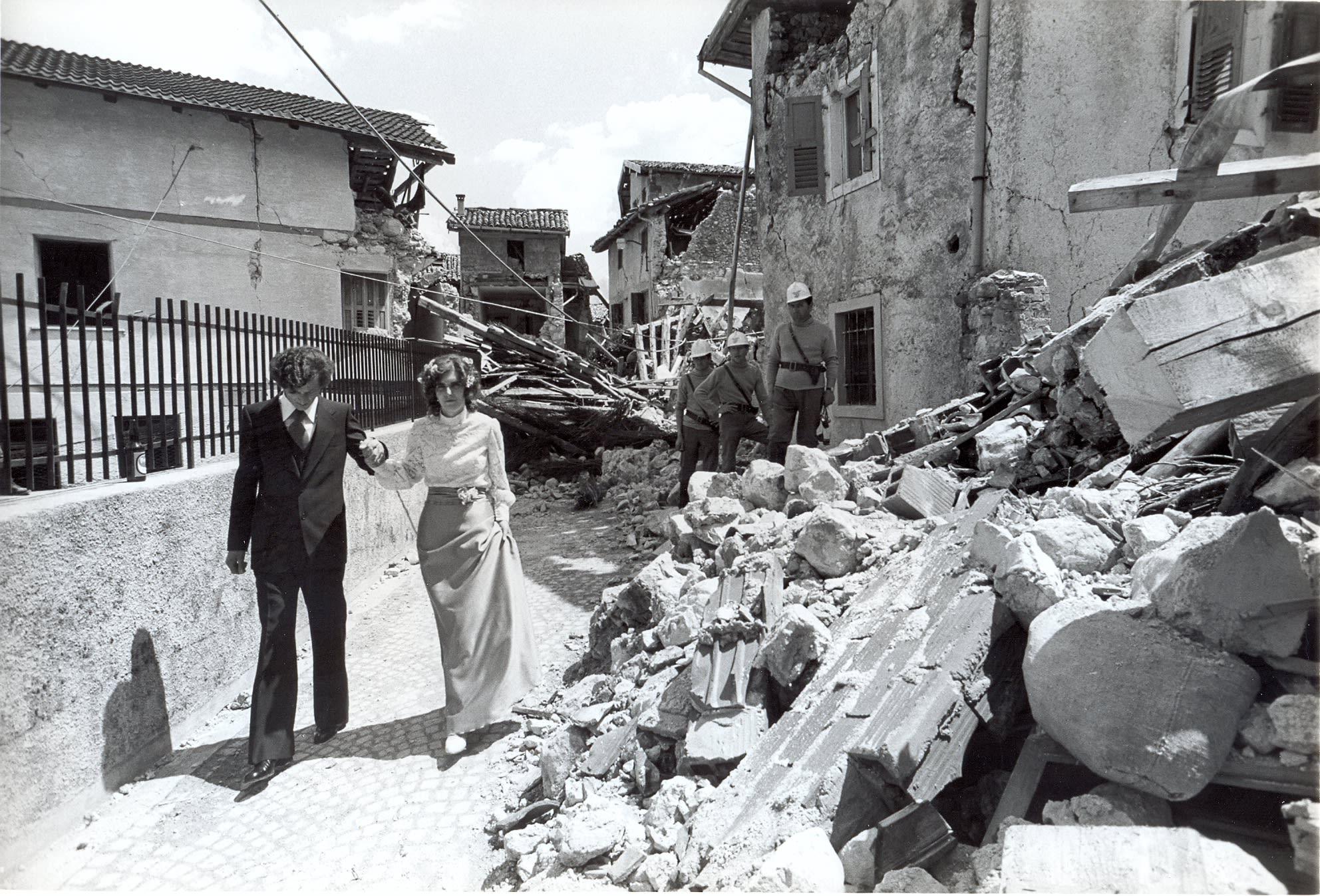
Yet, as Italy pauses to remember the victims, experts highlight the event as more than a disaster. For the international scientific community, the Friuli earthquake represents the "Year Zero" of modern Italian seismology—a pivotal moment that shifted how nations monitor, understand, and rebuild after tectonic shifts.
(From 'ILFattoQuotidiano" newspaper). From that event onward, seismology in Italy began to change its methodologies and paradigms," says Giuseppe De Natale, a leading seismologist and volcanologist at the National Institute of Geophysics and Volcanology (INGV).
At the time of the 1976 quake, Italy lacked a centralized, reliable national seismic network. Monitoring fell to local outposts like the Experimental Geophysical Observatory of Trieste (now OGS). The Friuli sequence—unusual for its secondary, violent shocks months later in September—forced scientists to confront the complex mechanics of the "Adriatic microplate."
Experts now know this microplate rotates counter-clockwise, compressing the Eastern Alps as it collides with the Eurasian plate. This "reverse fault" mechanism not only caused the Friuli disaster but, through the same rotational tension, triggered the catastrophic Irpinia earthquake in Southern Italy four years later.
The "Friuli Model" of Reconstruction
Beyond the science, the Friuli earthquake birthed a socio-political miracle. While many disaster-stricken areas worldwide fall into decades of stagnation, Friuli recovered with unprecedented speed. This became known as the Friuli Model, defined by a simple but revolutionary hierarchy:
Factories first: To preserve the economy and jobs.
Houses second: To maintain the social fabric.
Churches last: To preserve cultural identity once the community was stable.
The reconstruction was managed directly by local mayors rather than distant bureaucrats, a move that fostered deep public trust and efficiency.
From Ruins to Resilience
The double blow of Friuli (1976) and Irpinia (1980) eventually led to the creation of Italy’s Department of Civil Protection, now considered one of the most advanced in the world.
Today, the data harvested from the Friuli ruins continues to serve the global community. It provides the essential framework for predicting ground acceleration—the "shaking" that actually causes buildings to fall—allowing engineers to build smarter, safer cities in seismic zones from California to Japan.
As we mark this anniversary, Friuli stands as a testament to the idea that while we cannot prevent the Earth from moving, we can choose to learn from its movements to protect the future.